Leda’s post-departure liberation
The Lost DaughterLeda’s post-departure liberation is the unexpected ease she experiences after her daughters move to Toronto to live with their father, Gianni. Rather than feeling bereft, she feels released from the vigilance and domestic labor that had organized nearly twenty-five years of motherhood. Her renewed freedom is real, but the memories through which she understands it keep that relief in view alongside the exhaustion, ambition, and maternal ambivalence that preceded it.
Separation and Unexpected Relief
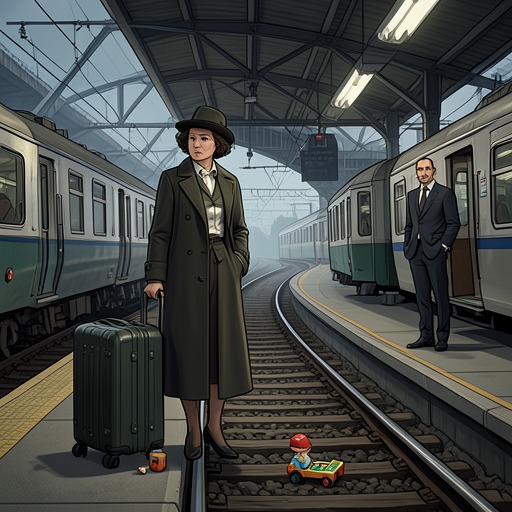
When Bianca and Marta relocate to Toronto, Leda is embarrassed and astonished to discover that she is not upset. The house is suddenly neat, household shopping and laundry no longer fill her days, and she does not replace the woman who had helped with domestic work after that woman finds a better-paying job. Leda experiences the change as a release from the constant anxiety of having to care for her daughters, as if only now she had definitively brought them into the world.
The separation does not end their contact. Leda calls once a day to ask how the girls are and what they are doing. They speak as if they were independent, although they live with their father, and rarely bring him into their conversations with her. Their calls can be evasive, irritable, or shaped by the company around them; Bianca also calls with practical requests, such as advice about clothes or help locating papers, and continues to turn to Leda with anger and sorrow. Leda responds as expected, but distance makes direct intervention impossible. Requests that once involved immediate care become occasional, light tasks, and she feels as though a difficult job has finally been completed.
The Earlier Burden of Motherhood
Leda’s relief gains its force from the strain that came before it. Reflecting on motherhood, she resists treating a child as simply a recognizable continuation of either parent: a child is living matter, formed through reproduction but not reducible to a family likeness. Her own pregnancies had brought a bodily contradiction, as a life that was hers grew within her while also moving beyond her. She had wanted Bianca at twenty-three, during a difficult struggle with Gianni to keep their university jobs, and then planned Marta soon afterward because she believed her first daughter needed a sibling.
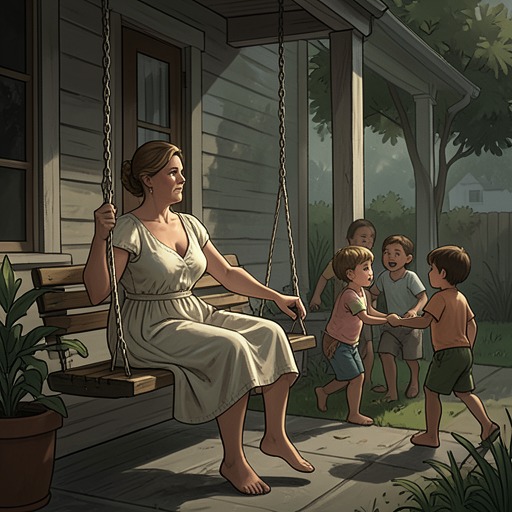
In the years when the girls were small, Leda’s effort to be a patient mother coexisted with deep depletion. She let Bianca turn her into a doll in their games, even when she was exhausted and Marta’s poor sleep left her little rest. When Marta cried in another room, Leda felt a kind of release from Bianca’s play, then reassured herself that it was the younger child who had pulled her away. The small reprieve anticipates the larger one that arrives when her daughters leave home: in both cases, relief comes through separation from demands, and is accompanied by a strained sense of innocence.
Her recollections also connect maternal pressure to the work and recognition she wanted for herself. While struggling to finish an academic essay, Leda was interrupted by five-year-old Bianca and struck her. The incident occurs against a background of competing claims on her time: research, professional approval, a position, and money of her own were all pressing on her while dinner and family life continued around her. The episode does not cancel her later care for her daughters, but it makes clear that the burden she feels is not merely domestic inconvenience; it is bound up with ambitions for a life that motherhood repeatedly interrupts.
Renewed Work and Independence
After the move to Toronto, Leda changes her working habits without arranging them around the girls’ schedules. She marks students’ papers at night while listening to music, sleeps in the afternoon with earplugs, and eats once a day at a nearby trattoria. She describes changes in her habits, mood, and physical appearance: at the university she becomes less irritated with students, and a colleague who has known her for years remarks that she seems less distracted and more generous. Within a few months she regains the slenderness of her youth and feels a gentle strength returning. At forty-seven, four months short of forty-eight, she is surprised by the sense that years have fallen away, though she does not know whether she is pleased.
This reordering of her life is not simply a return to an earlier self. Years before, an invitation to an international conference on E. M. Forster had forced Leda to confront the practical conditions of academic ambition. She initially declined because she lacked money and suitable clothes, while Gianni was busy and Marta had a slight cold. Before leaving for London, she prepared food, arranged visits from friends, and found a student to babysit in case Gianni had unexpected meetings. The meticulous preparations show the extra work required to make professional travel possible while she remained responsible for the household and children.
The conference helped lead into a period of intense academic work. After returning, Leda went to the university for long days, and her professor helped her finish and publish an essay and pursue time at Professor Hardy’s university. She became absorbed in work and in her feelings for Hardy, writing and calling him while Bianca and Marta were with her. She later recalls that she left her daughters almost without warning. That history complicates the later ease she feels when they live elsewhere: the freedom that now allows her to work without regard for their needs has an earlier counterpart in moments when professional desire and private life were already in conflict.
Freedom’s Limits
In June, during this period of well-being, Leda decides to take a holiday by the sea after finishing exams and university paperwork. She rents an inexpensive apartment on the Ionian coast for mid-July through the end of August, though she does not set out until July 24. At first the drive feels easy and guilt-free, with the car packed mainly with books for preparing the next year’s courses. Then, while stopping for gas, she becomes anxious about the sun, the heat, and the possibility that the apartment will be unpleasant. Her freedom does not make her immune to unease; the decision to travel is followed by doubts that make staying home and working seem more comfortable.
A later confrontation gives the language of liberation a further moral edge. Nina tells Leda that she had the doll while Nina struggled with her crying daughter, and that Leda watched without saying anything or helping. Leda accepts Nina’s judgment that she is an unnatural mother. The exchange does not undo the relief she has found in distance from her own daughters, but it exposes the difference between feeling released from care and being absolved of responsibility. Across these episodes, liberation remains both a change in circumstance and a troubling measure of how much maternal responsibility had come to weigh on Leda.